


Bedside Crib Q&A
Get answers to all your questions about bedside cribs.
By designer Carina Glæsner, creator of the Sebra Bedside Crib
USE
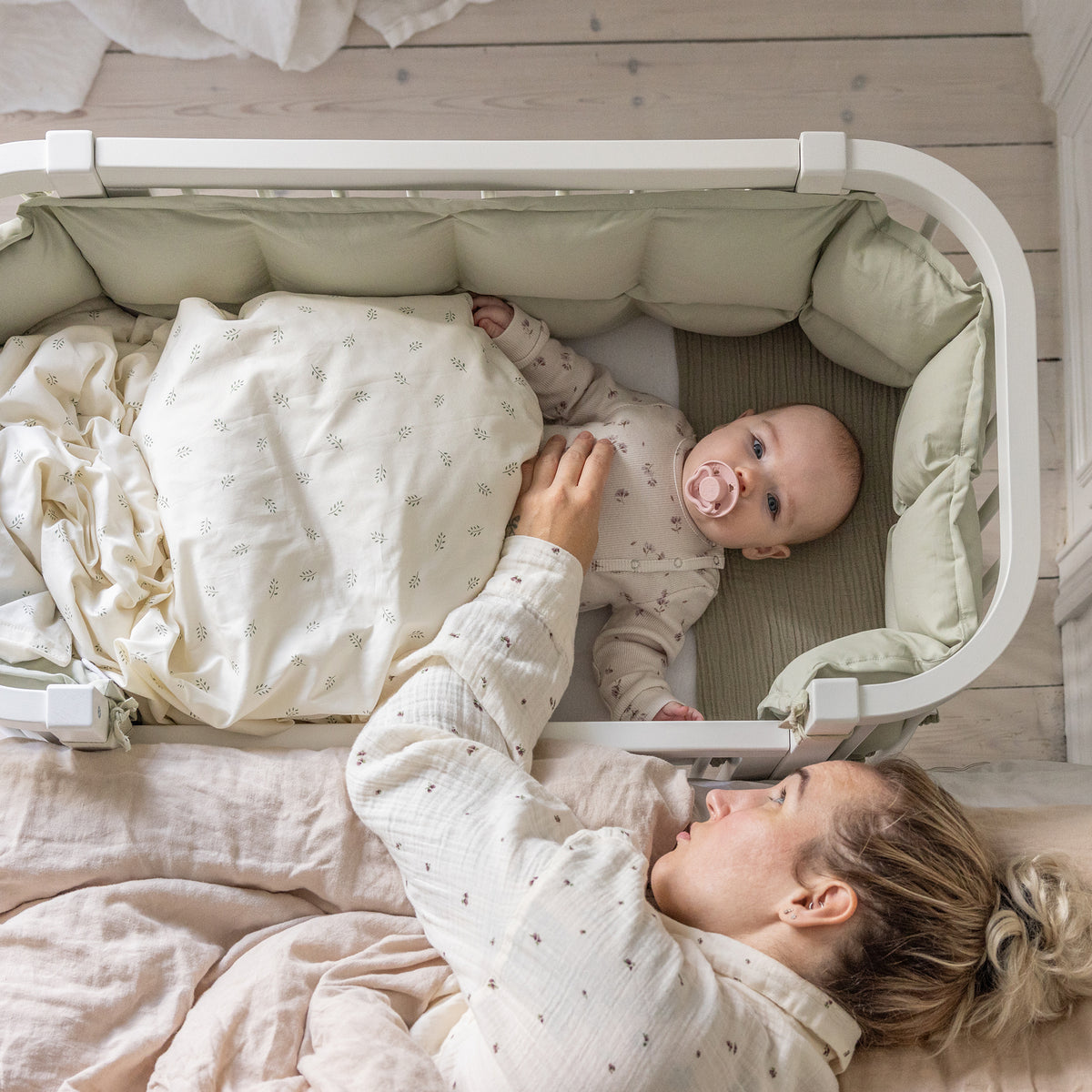
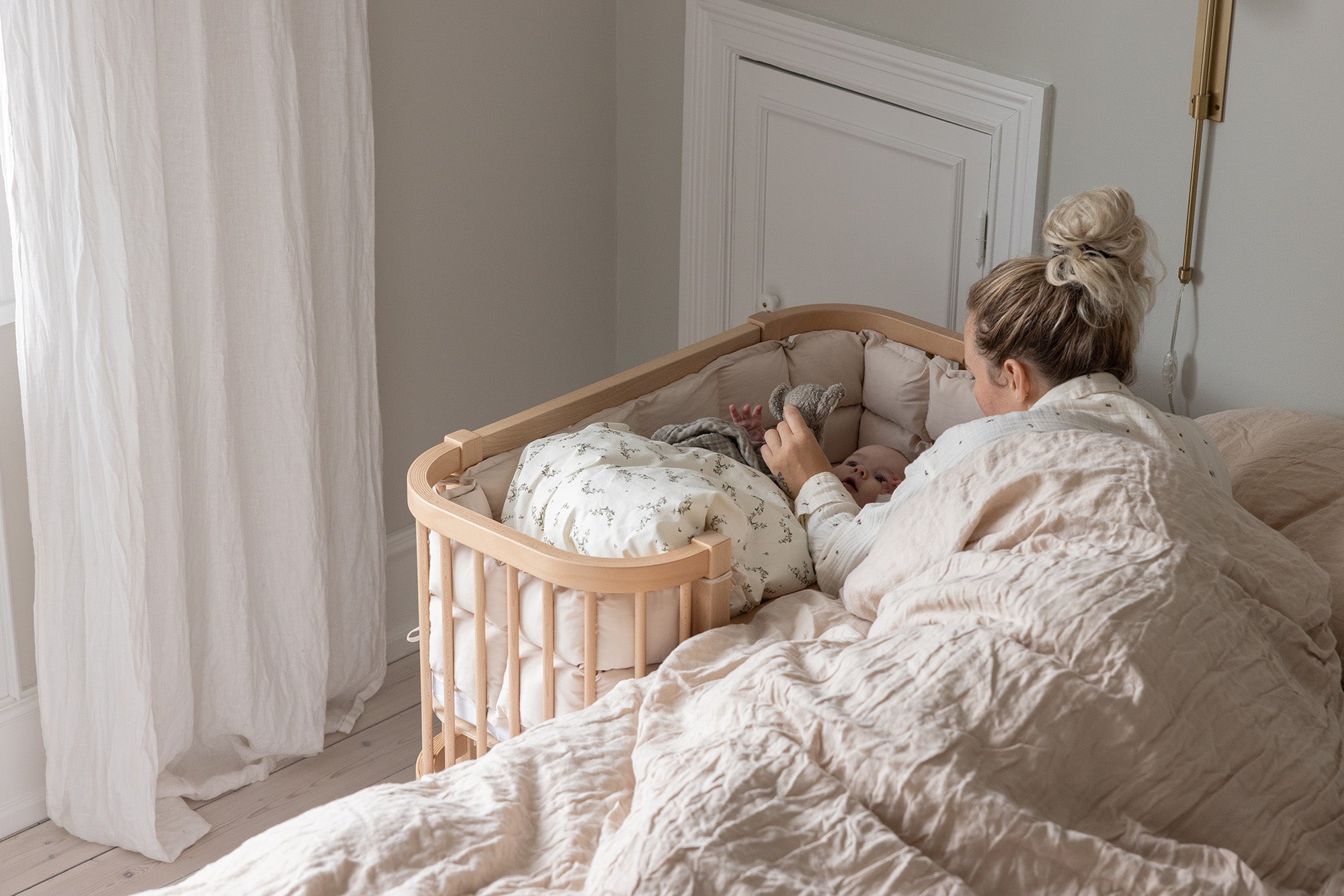
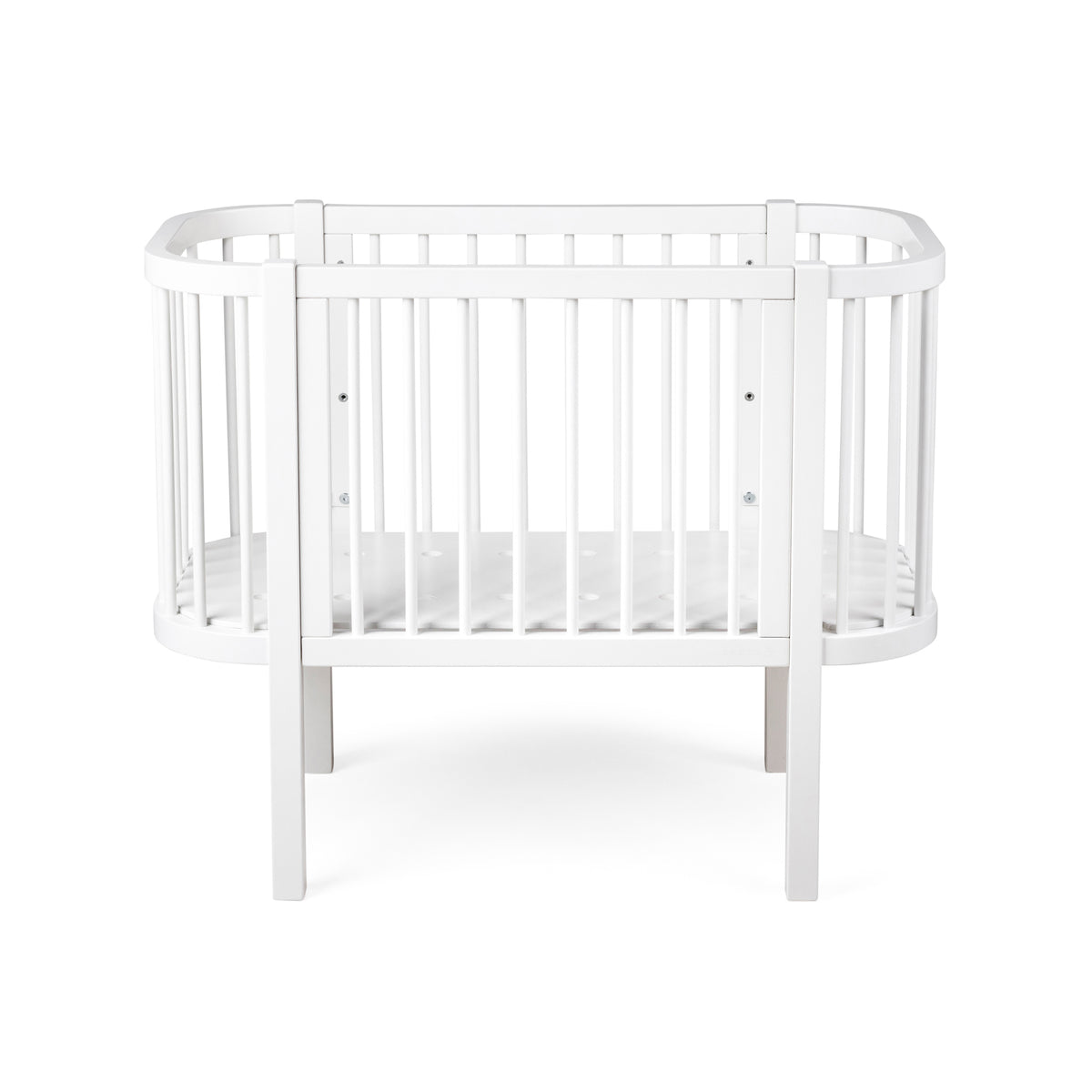
A bedside crib is a small baby crib that can be attached directly to the parents' bed. It serves as a safe and cosy sleeping space for your newborn, allowing you to easily comfort, nurse, and keep an eye on your baby – without having to get up at night.
You can use a bedside crib from the day your baby is born. It is particularly useful in the first few months, when your baby wakes frequently at night, and you want to be close to your baby. This is when a bedside crib provides both a sense of security and practical support for you as a new mum.
Newborns have a great need for closeness and security. A bedside crib allows co-sleeping without sharing a bed, supports breastfeeding, and reduces stress for both baby and parents. It provides peace of mind at night and better sleep for the whole family.
Most people use a bedside crib from the time their baby is a newborn, and it's safe to sleep close together – in separate beds.
You can generally use the bedside crib until your baby becomes more mobile, such as when they can roll over or sit up on their own. As a rule of thumb, the Sebra Bedside Crib can be used until around six months of age.
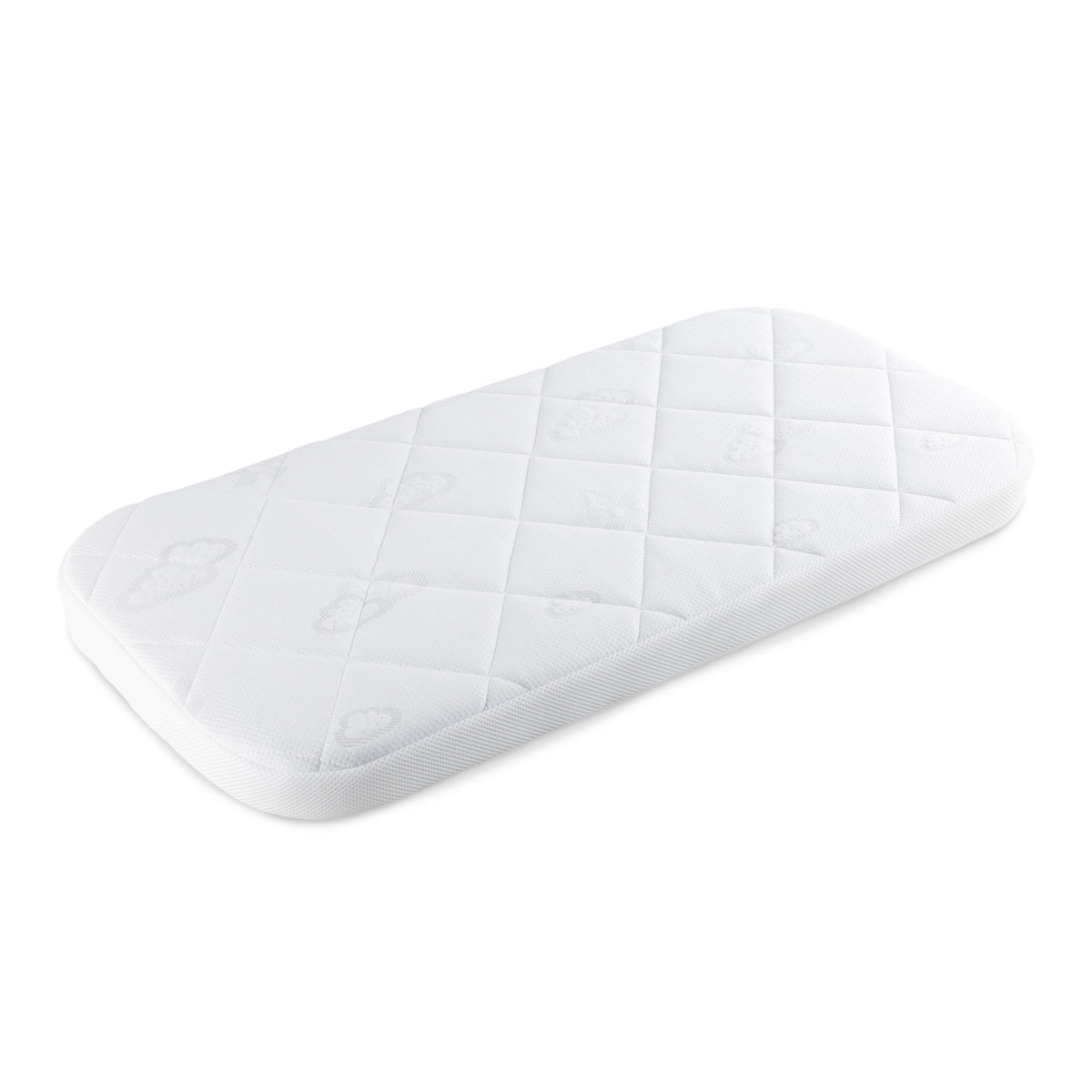
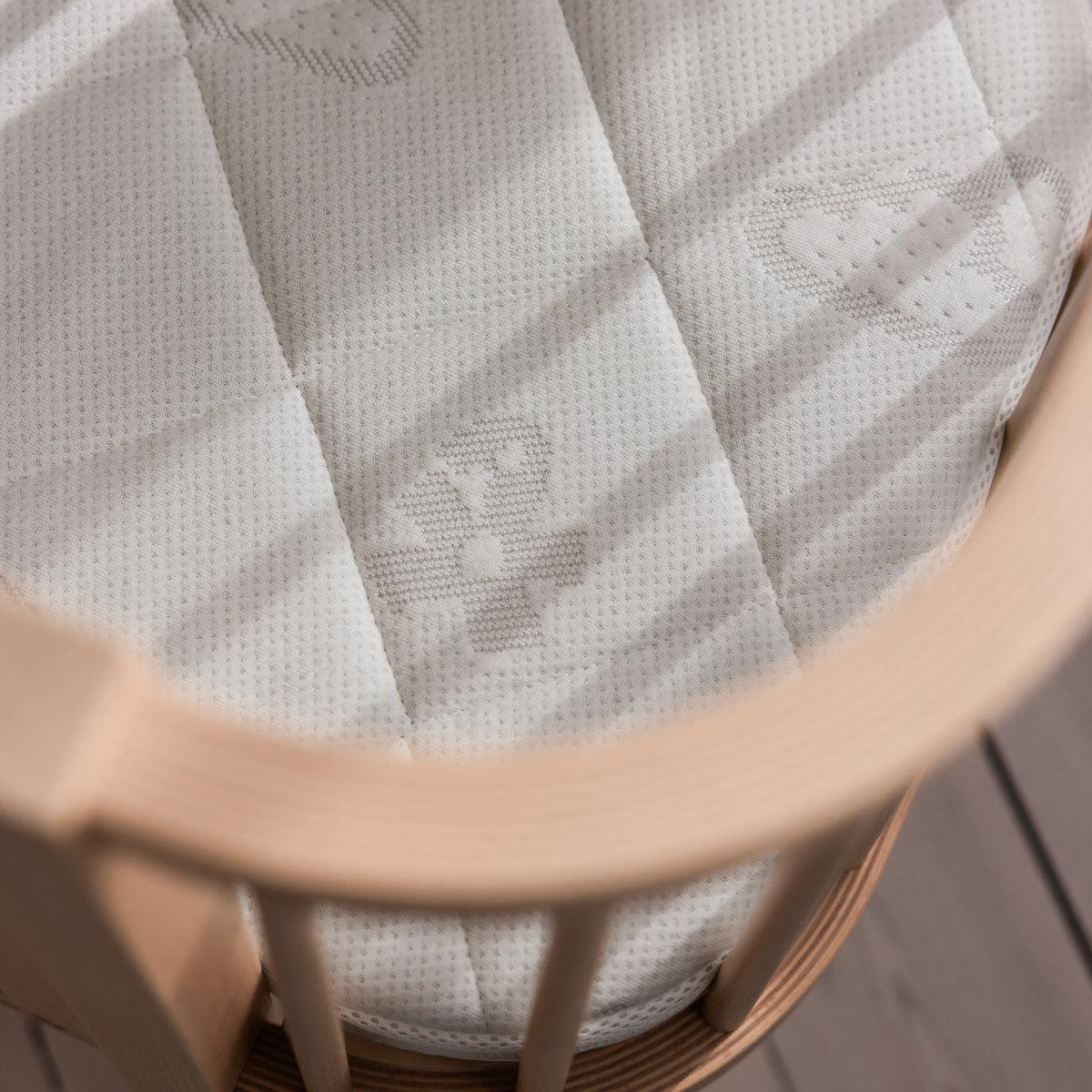
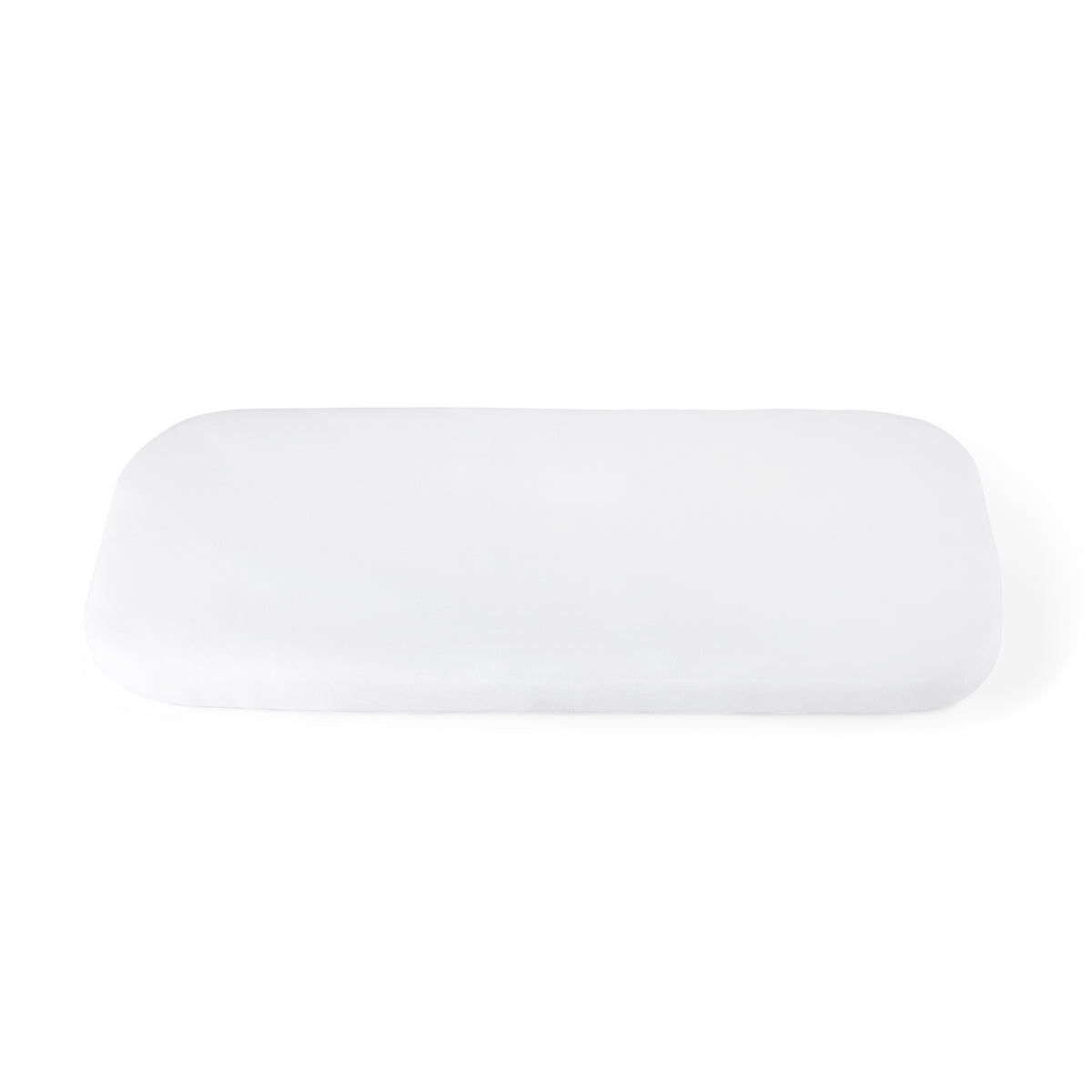
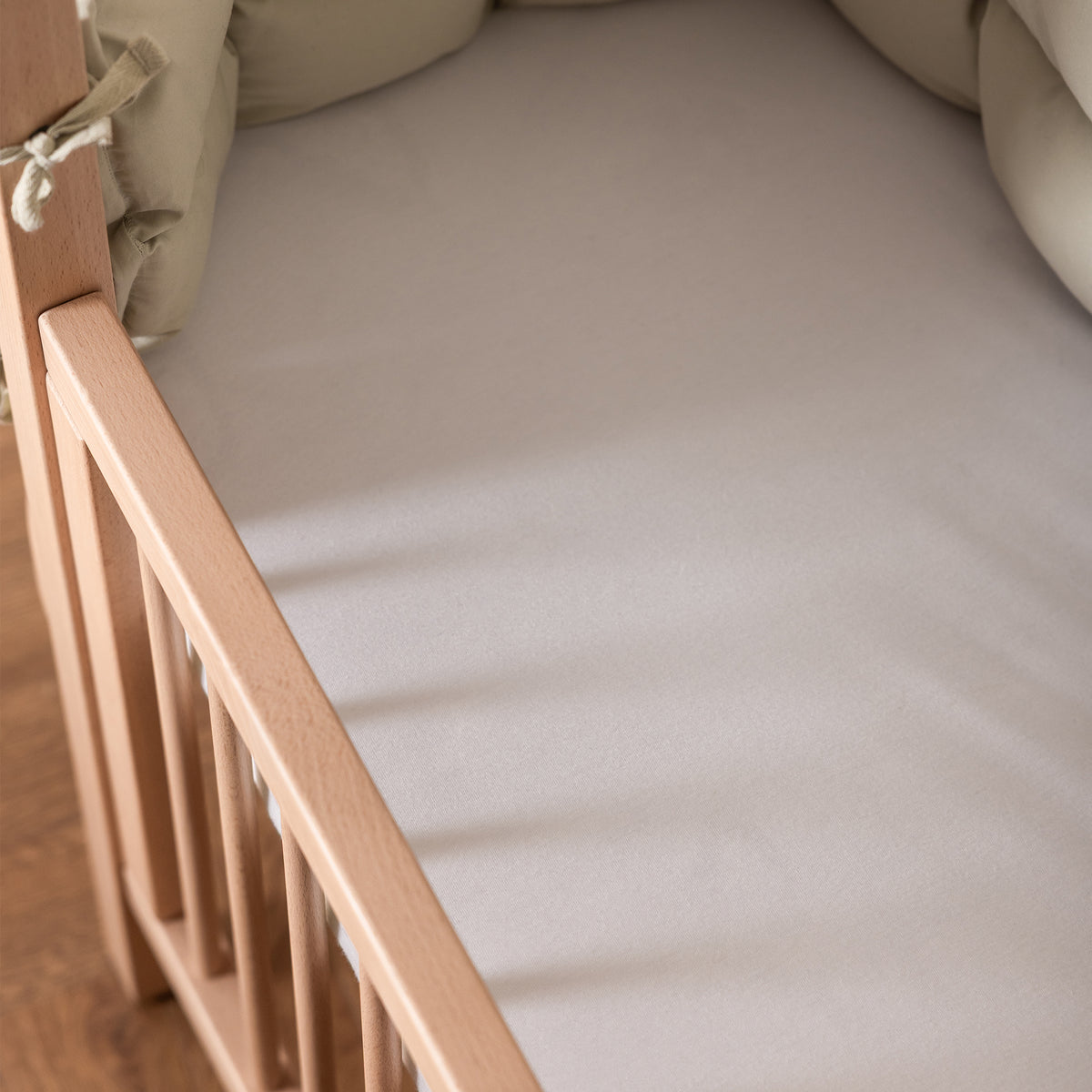
In most cases, the mattress must be purchased separately along with your bedside crib. Make sure you choose a mattress that fits the crib perfectly to avoid any gaps forming between the mattress and sides of the crib.
The mattress should also be firm enough to allow your baby to breathe if they turn over and lie face down on it. The mattress is not included when you buy the Sebra Bedside Crib.
It depends on your needs. A bedside crib provides greater closeness and makes passing your baby a dummy or breastfeeding easier, especially in the early months. A freestanding cradle can be placed anywhere in the room, but requires you to get up at night. Many new parents prefer the bedside crib during the early infant period.
If you choose the Sebra Bedside Crib, you get 2-in-1 and can choose which solution best fits you and your bedroom decor.
All bedside cribs come with assembly instructions.
Assembly instructions for the Sebra Bedside Crib are included in the packaging, and you can also watch this video assembly guide here. As the Sebra Bedside Crib can be adapted and attached to many different types of parents’ beds, the video goes into great detail.
SAFETY
Choose a model that can be adjusted in height to fit your bed. Your baby must sleep at a lower level than you so they can't roll over into your bed. It's also important that the crib can be securely attached to the parents' bed to avoid any gap between the two beds.
It depends on which model you buy. It is essential that you attach the bedside crib to the parents' bed to ensure there is no gap your baby could fall into.
When you choose the Sebra Bedside Crib, it comes with two adjustable brackets that fit the vast majority of beds. If your bed has a unique design that makes the brackets unusable, there are other attachment fittings available on the market.
The height and design of parents' beds vary greatly, so it's hard to give a clear-cut answer.
The key point is that the bedside crib is attached to the parents' bed, and your baby sleeps at a lower level than you. This ensures that your baby doesn't roll over into your bed, risking that you lie on top of them in their sleep.
A bedside crib must comply with European safety standards (EN 1130). It must have stable sides, no dangerous gaps, and an attachment option to the adult bed that is secure and stable.
The adjustable side should be at or below the height of the parents' bed, with a minimum distance of 12 cm between it and down to your baby. This means that for safety reasons, your child should not sleep at the same height as you.
You should stop using the bedside crib when your baby can sit up, pull up or roll over the edge – typically around six months. This increases the risk of falls. It's also important to stop using the crib if it can no longer be securely attached to the adult bed.
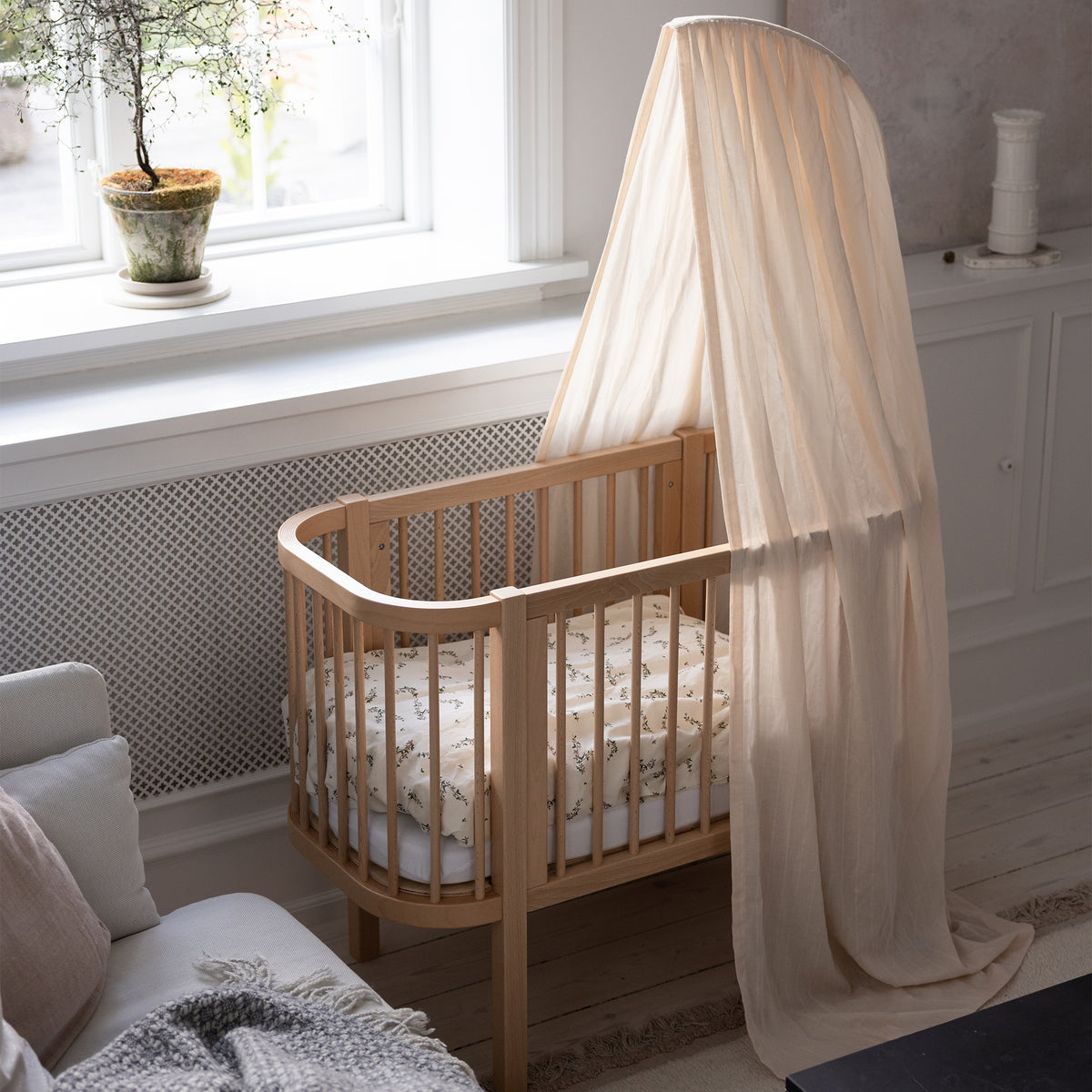
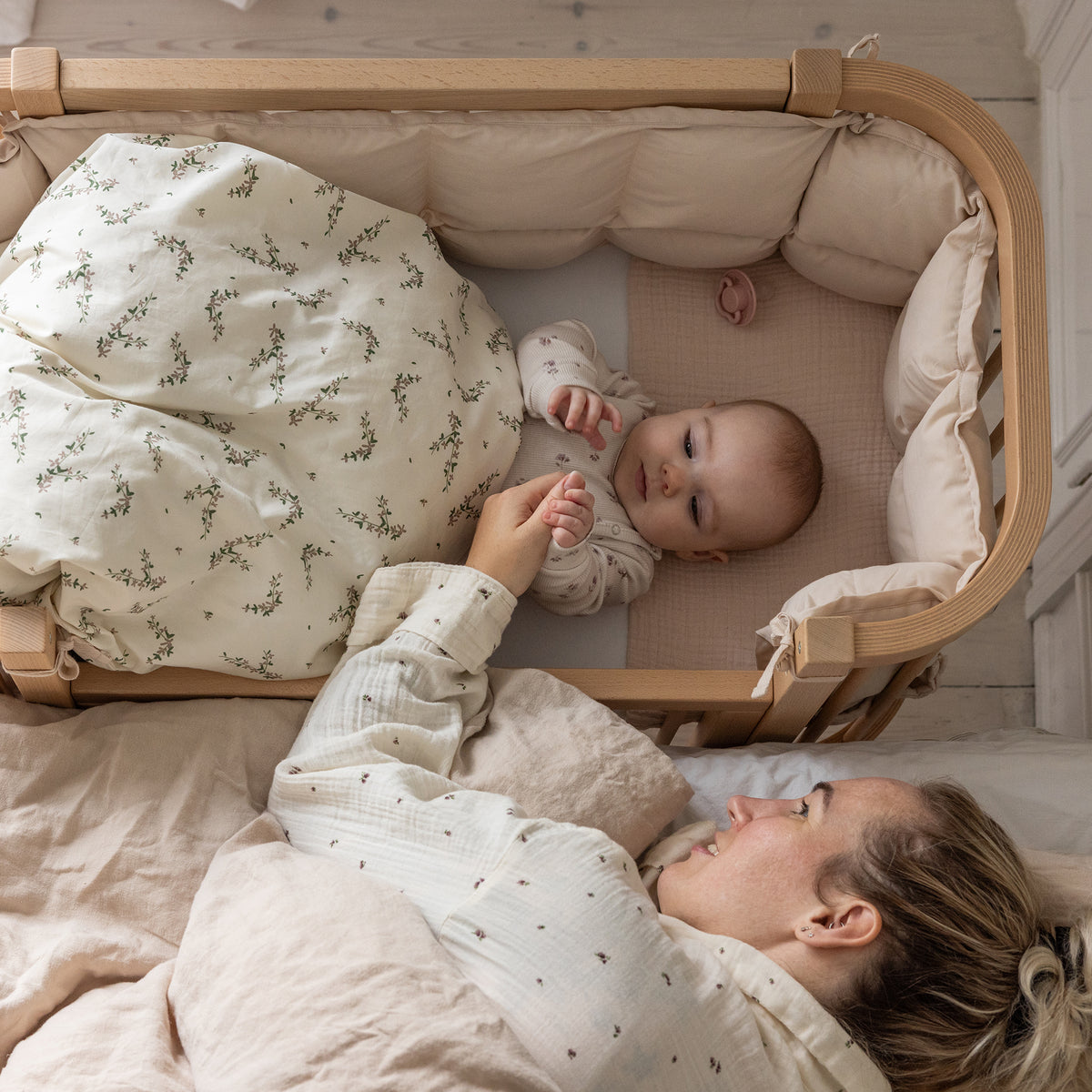
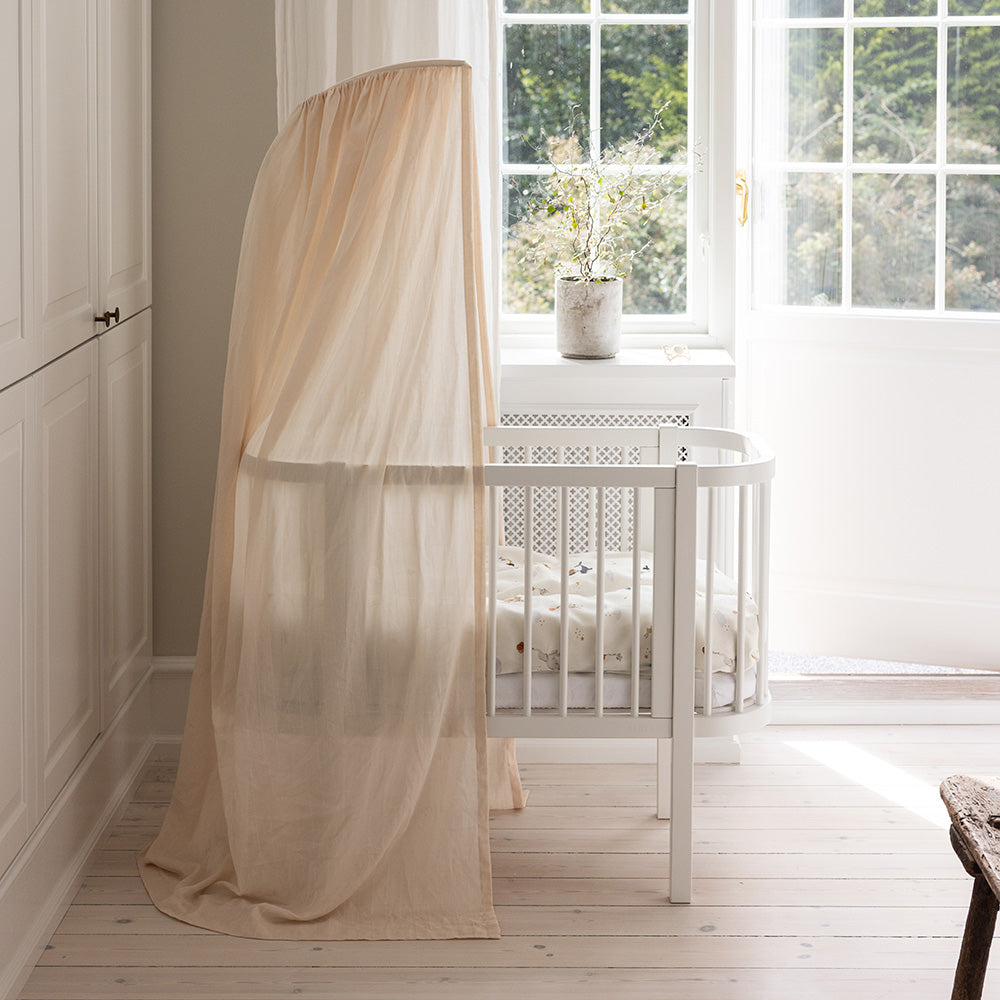
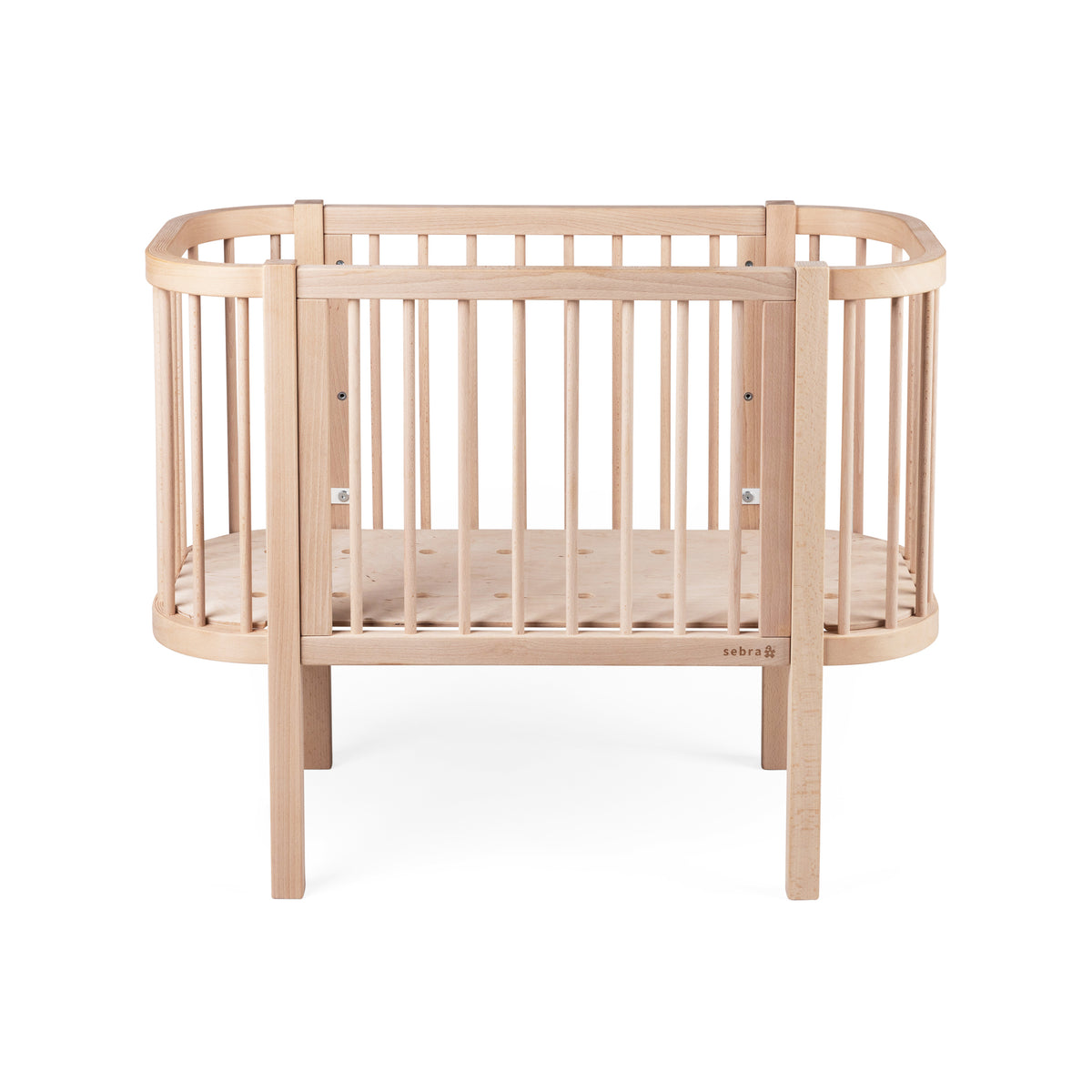
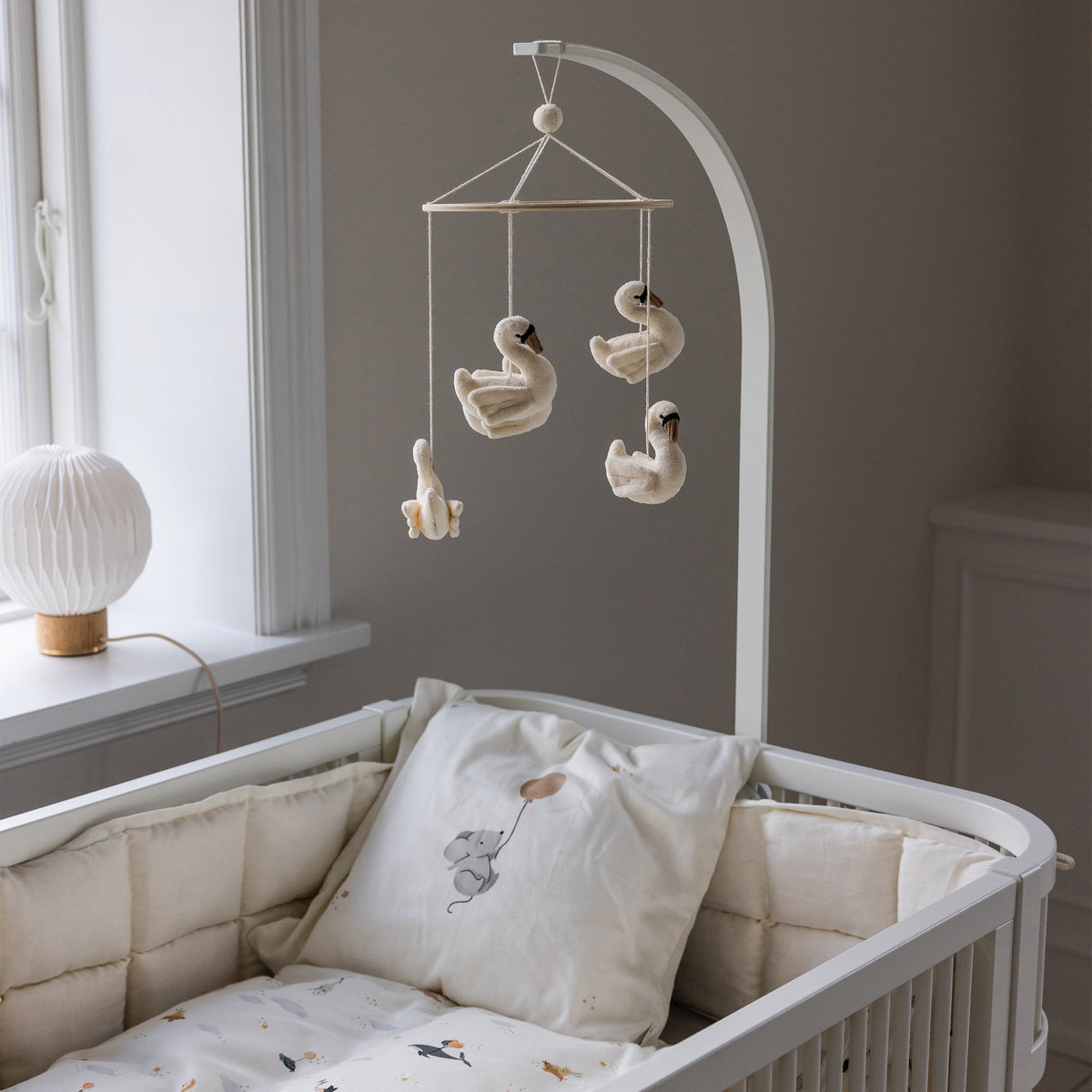
The Sebra Bedside Crib has been designed with the modern family in mind. Its unique construction allows parents to sleep close to their newborn – without compromising on safety.

Inspiration for life with children
View all articles
Life with a baby should still make it easy to get out the door. That's the idea behind MOVE – a collection of thoughtfully designed products that help you pack, stay organised and create a comforti...
Read more

Read more
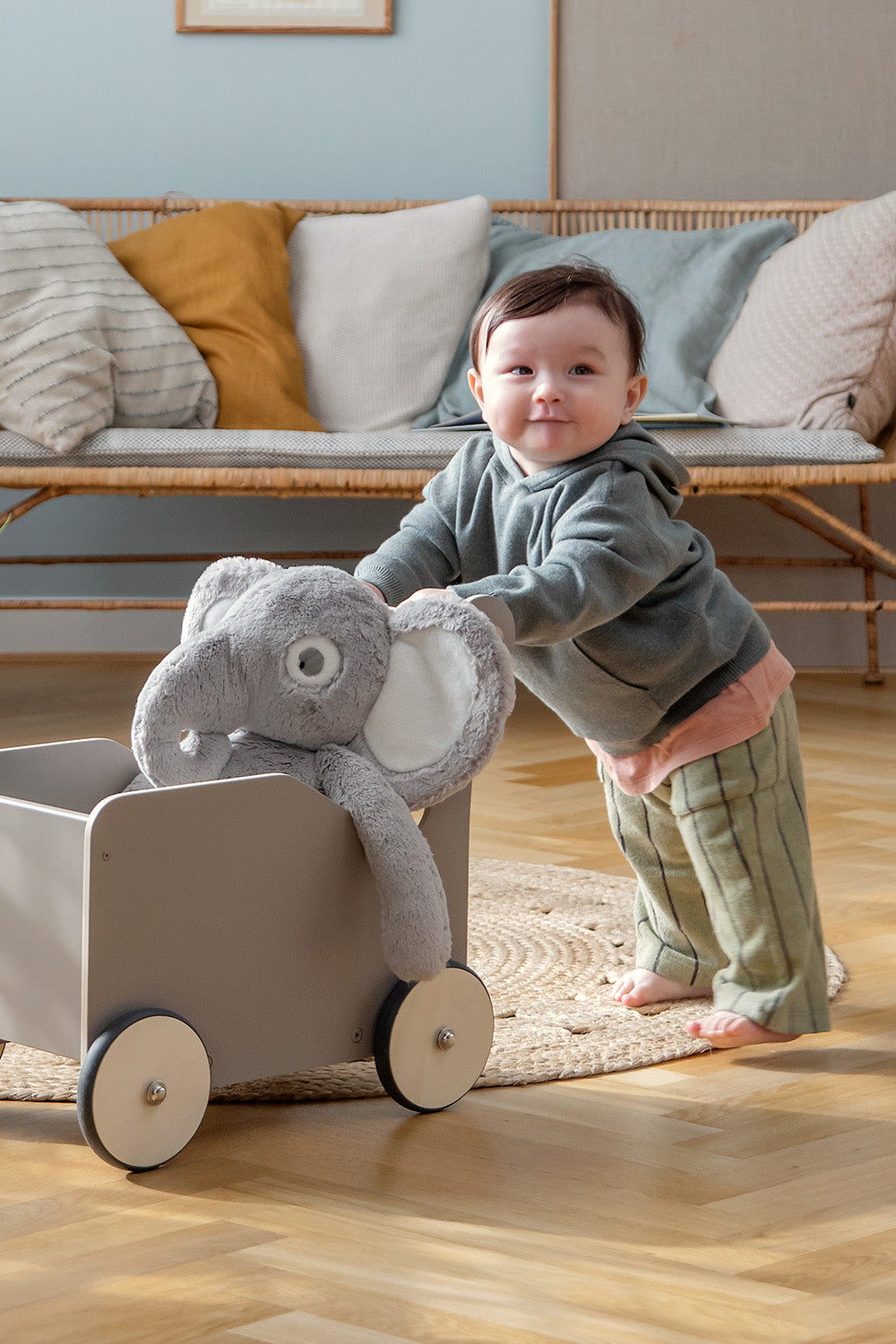
In this article, we explore the walking stage – how it builds on the experiences from the crawling phase, and how you as a parent can support your baby through activities and play that strengthen b...
Read more
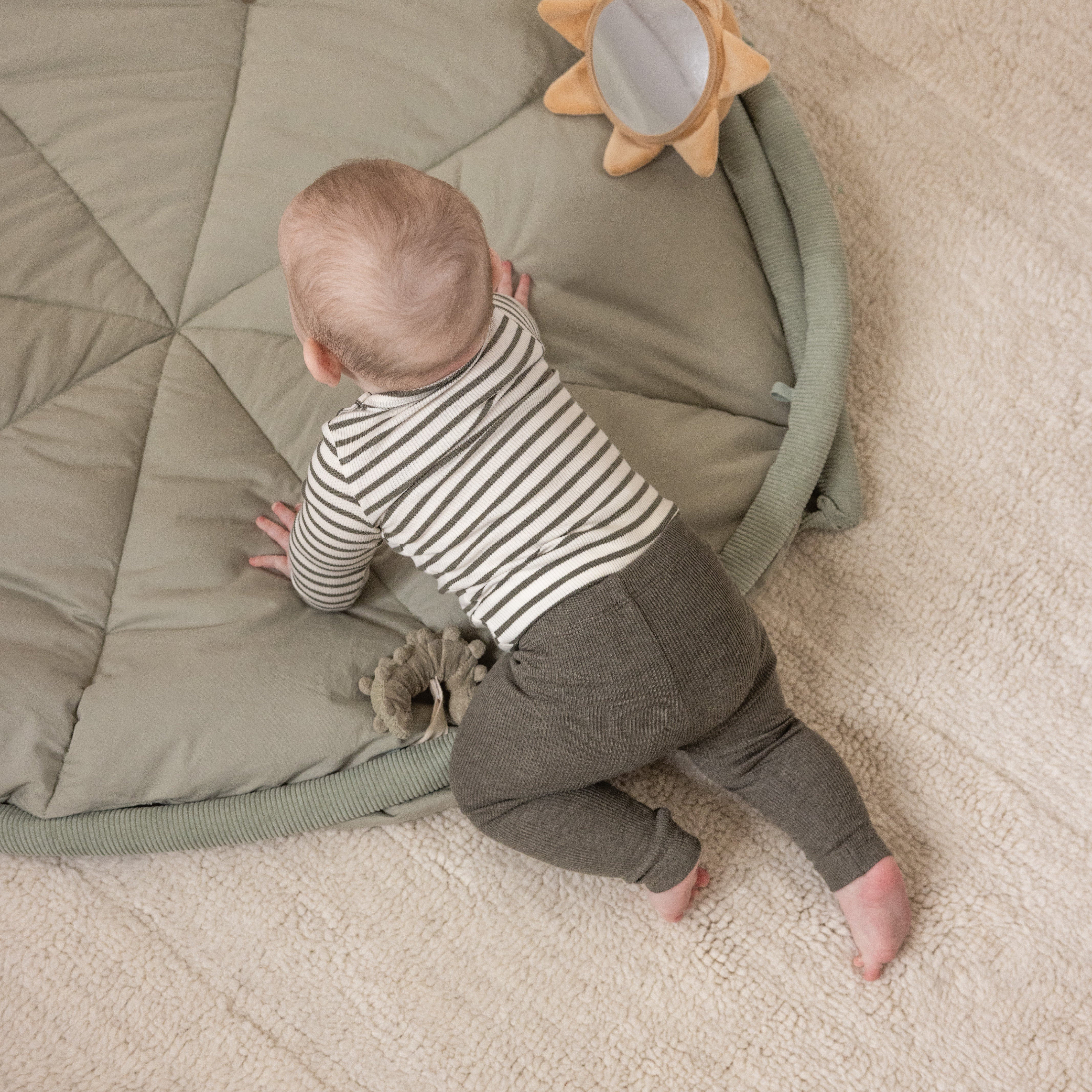
In this article, we take a closer look at the crawling stage – how crawling builds on earlier movements such as rolling, pivoting, and creeping; why crawling is an essential step in your baby’s mot...
Read more
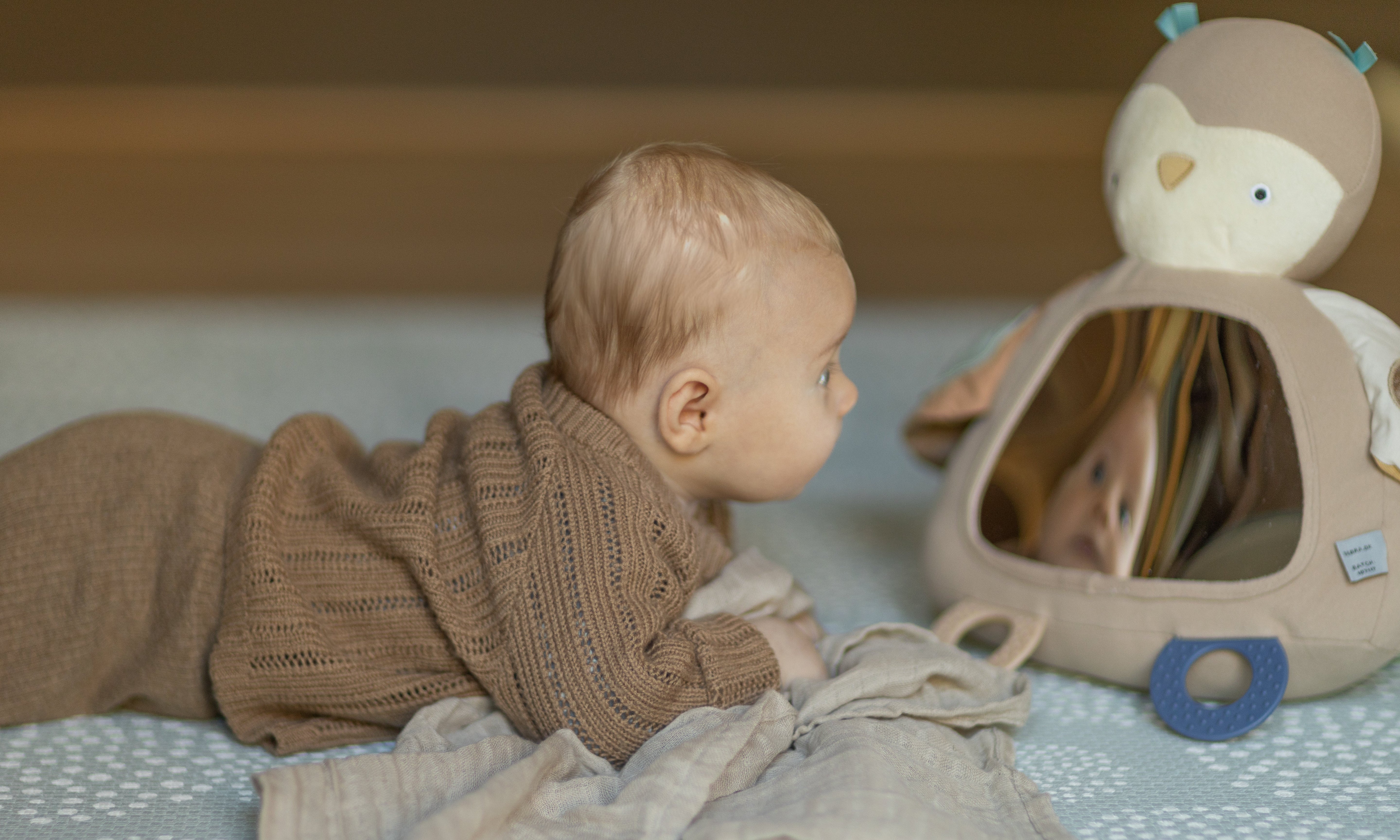
This article focuses on the stage where your baby begins to discover that they can control their body and move around. We’ll look at what it takes for a baby to start moving forward – and how you a...
Read more
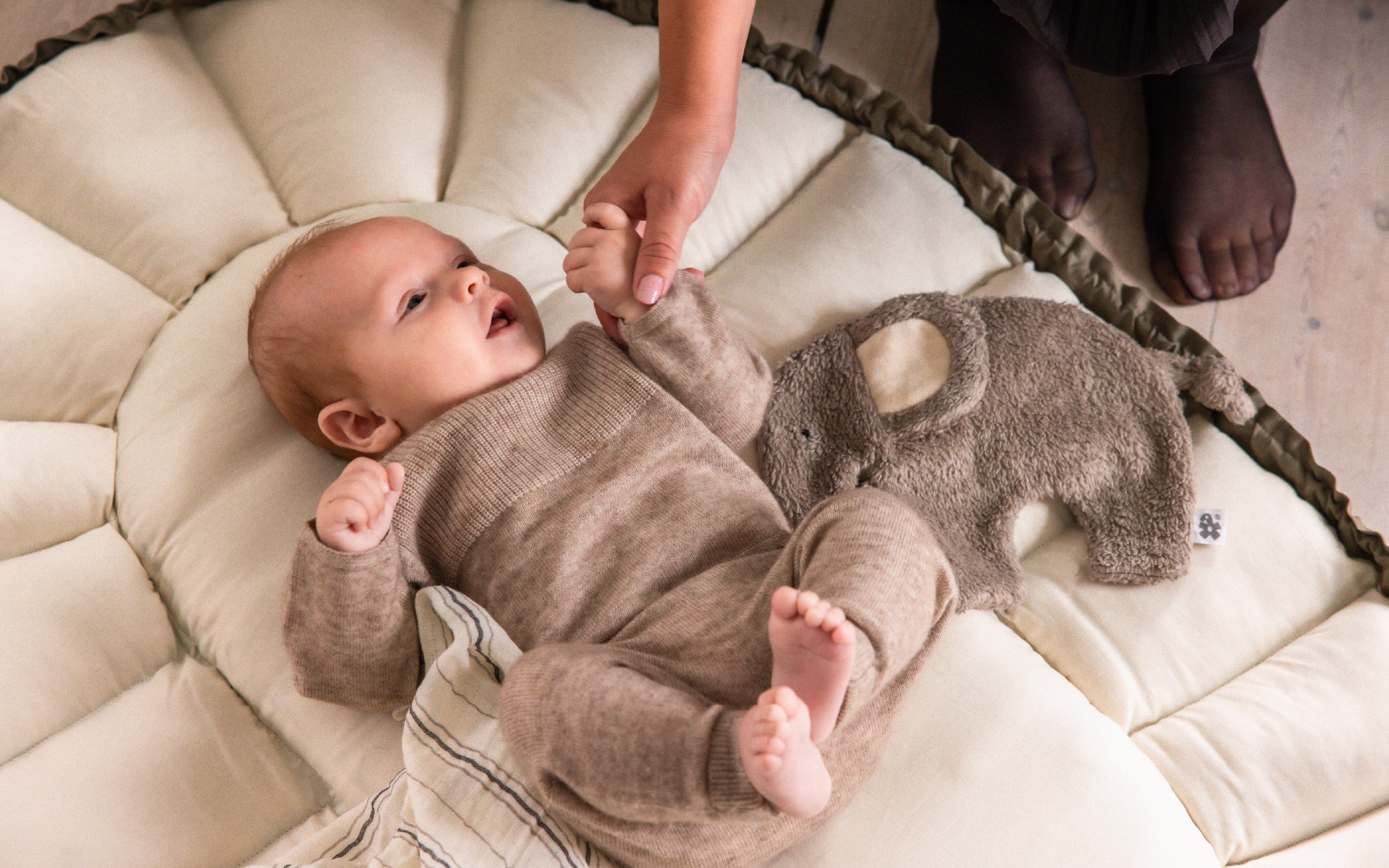
In this article, we focus on the development that takes place during the first months of your child’s life, including how you as a parent can support your baby’s motor development through everyday ...
Read more

With this mini-guide, you'll find answers to the most common questions we hear from first-time parents – so you can easily choose the perfect sheet for your child.
Read more
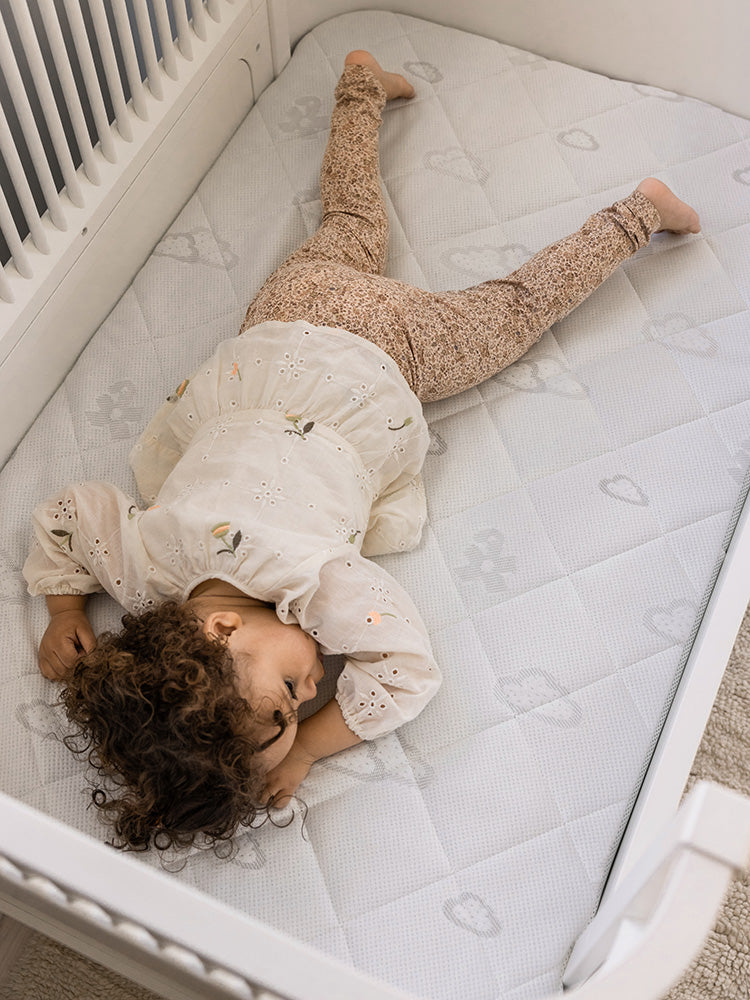
In this article, we explore what makes a good children's mattress, why mattress hygiene is so important, and how you as a parent can make a safe and informed choice.
Read more

Are you setting up a baby changing area? We’ve put together a quick and easy mini-guide to walk you through the key differences (and similarities) so you can find the perfect fit for you and your l...
Read more

Explore the four stages of the Sebra Bed that allow it to grow with your child from newborn to 6–7.
Read more